About the founder
A name connected to stewardship. A life increasingly shaped by it.
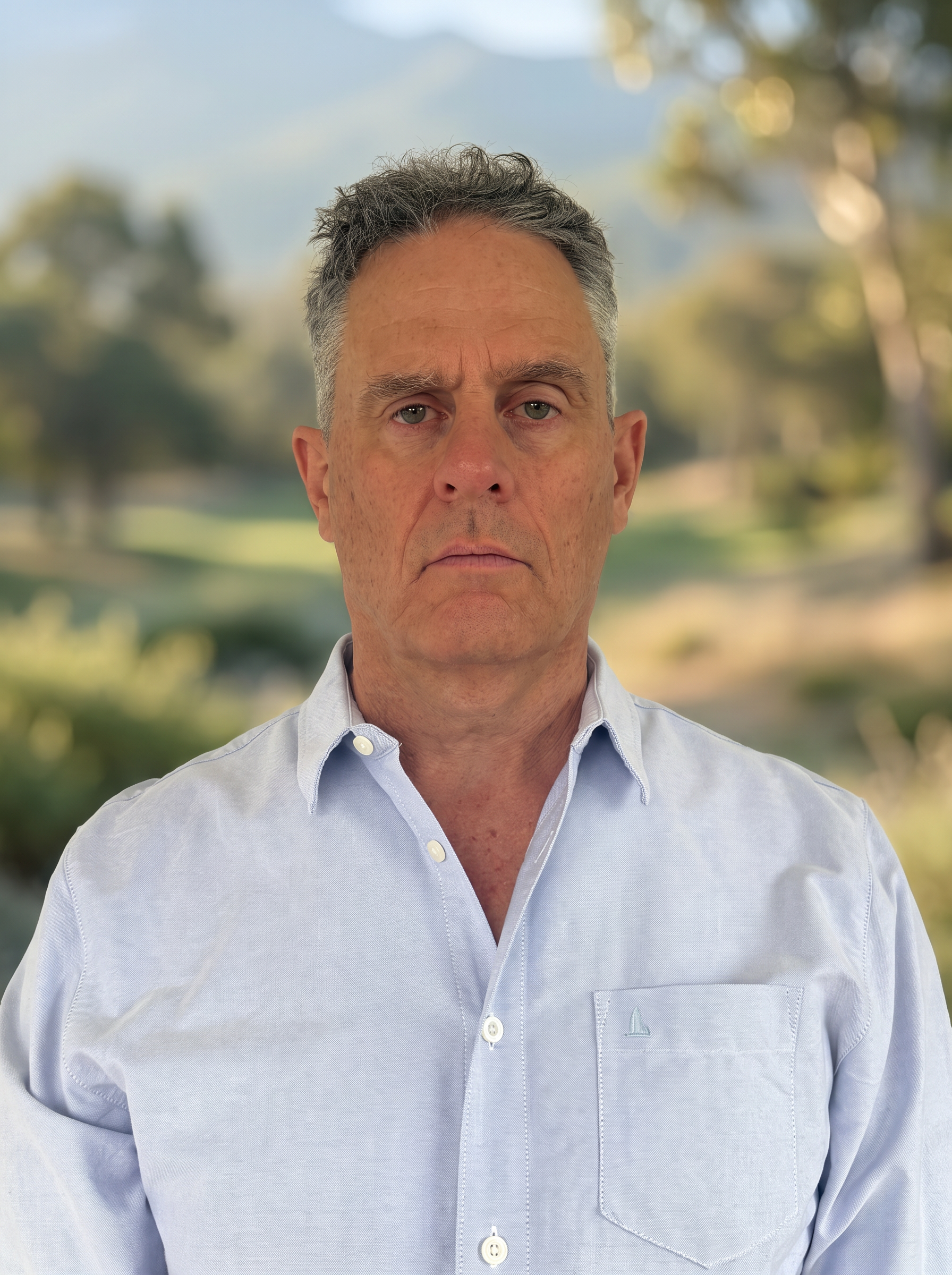
Stuart Holdsworth
The name Stuart carries an unexpected connection to the philosophy behind this initiative.
Stuart is a form of Stewart, a name derived from the historic role of the steward — the person entrusted with responsibility for a household, estate or realm. The older roots refer to a guardian of the household.
Over time, Steward became Stewart, and the French-influenced spelling Stuart became established.
For founder Stuart Holdsworth, this linguistic history became more than an interesting coincidence. It helped give language to a larger question: what would happen if stewardship became a more conscious organising principle for services and overseeing humanity?
A person entrusted with care.
A name derived from the role.
A later form carrying the same historical root.
The name Stuart has its origins in the Old English and Old Norse languages, derived from the word steward, which means "house guardian" or "household manager" — a person responsible for overseeing the affairs of a household, reflecting a role of authority and trust.
The name became prominent as a surname in medieval Scotland, particularly among the Scottish royal family, where it was eventually adopted as a first name. Culturally, Stuart has been associated with nobility, especially through the House of Stuart, a royal dynasty that ruled Scotland from the late 14th century and later England and Ireland after the union of the crowns in 1603.
Their reign included pivotal events such as the English Civil War, the execution of Charles I, and the restoration of Charles II. The name Stuart thus carries connotations of historical significance, political power, and cultural heritage — rooted, as it has always been, in the idea of stewardship.
Stuart Holdsworth is a British born Australian entrepreneur, systems thinker and founder of Financial Simplicity, a financial technology business dedicated to helping investment organisations care for and manage personalised client portfolios more effectively.
His professional work has focused on responsibility, trust, long-term value and the systems needed to ensure that people's investments remain aligned with what matters to them.
Stuart works at the intersection of stewardship, assurance, personalisation and complex systems — developing practical methods that allow human individuality and responsibility to be preserved as decisions scale.
Beyond financial services, Stuart has developed a broader interest in how individuals, organisations, states and humanity make decisions in an increasingly complex and fragmented world.
This led to a central conviction: many of the world's problems are not caused only by a lack of intelligence, resources or technology, but by failures of responsibility, care, foresight and stewardship.
The Stewardship initiative seeks to develop a practical and inclusive framework through which people can understand what they influence, assess how well they care for it, and progressively become better stewards.
My belief is simple: if each of us became more conscious of what is entrusted to our influence, and worked to leave it better than we found it, the accumulated effect would significantly improve the world.